Rust, how an anti-raid sky settlement changes base defense
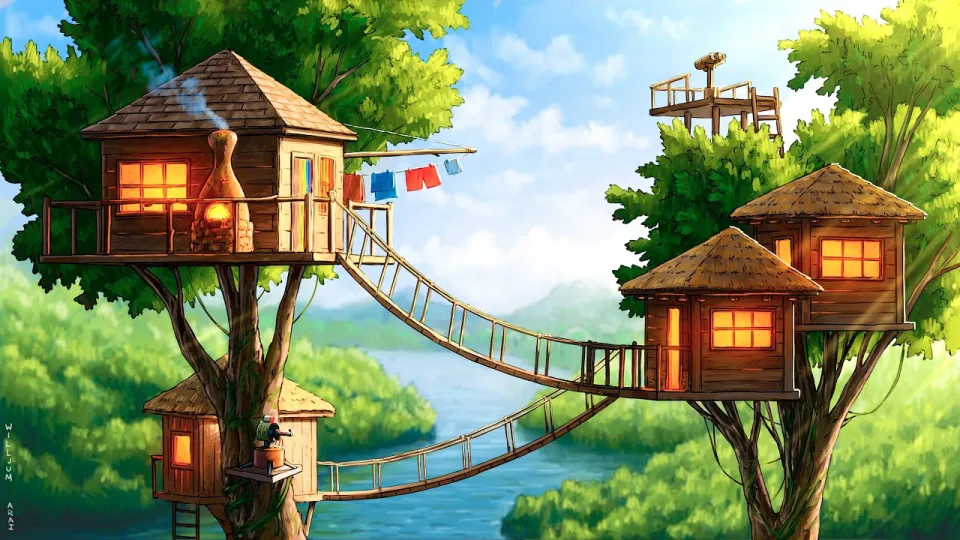
Video: I Built an anti raid sky settlement in Rust...
You can order the same kind of articles for your own video to boost it on YouTube and Google. Just message the Telegram bot @sat_sit_bot. The bot writes and publishes the articles itself (with your YouTube video embedded) on popular topical websites (no ads). Your first 50 articles are free.
· based on the channel Willjum
Key takeaways
- An anti-raid sky settlement in Rust is a base built high above the ground, usually on a tower or cliff, so raiders must spend extra rockets, ladders and time before reaching loot.
- Willjum's video on the concept was published on 10 October 2026 and celebrates the channel reaching 2 million subscribers.
- Elevation does not make a base unraidable: rockets, C4, ladders and explosive ammo still work, but every extra layer of vertical distance adds cost and exposure for the attacker.
- Sky builds demand constant upkeep and a stable connection to the ground, which is the main structural weakness raiders target.
- Willjum runs community servers including solo-only Thursdays and casual duo monthlies, listed in the video description.
An anti-raid sky settlement in Rust is a base placed high above the terrain — typically on top of a tower, a cliff face or a stacked structure — so that anyone trying to break in must first solve the vertical problem before touching the loot. The idea is not to make a base unraidable, which nothing in Rust is, but to make every raid attempt slower, louder and more expensive than the attacker expected. Willjum's build video on the concept, published on 10 October 2026, walks through exactly that logic while also marking the channel's 2 million subscriber milestone; supporters can back the channel through Willjum's Patreon page.
What an anti-raid sky settlement actually is in Rust
A sky settlement is a base whose living space, loot rooms and often the tool cupboard sit well above ground level, connected to the surface by a narrow, easily controlled path. In practice it looks like a tall tower with a small footprint, a cliff-side compound with a single entrance, or a stack of floors where the bottom section is deliberately cheap and empty. The design goal is to convert a horizontal raid, where a raider picks a wall and blows straight into the loot, into a vertical raid where every floor costs resources and time.
The concept borrows from a long tradition of Rust base design: bunkers hide loot behind extra walls, honeycomb absorbs explosions, and elevation adds a third dimension that many raiders rarely practice. A sky settlement combines all three. Because the structure is tall, the attacker cannot easily see inside, cannot quickly assess which floor holds the good stuff, and cannot retreat without exposing themselves to counters from above.
How elevation changes the cost of a raid
Elevation raises the price of a raid in three measurable ways: more explosives to reach the loot, more time spent exposed, and more gear risked on the approach.
- Extra layers. A raider who expects two walls of honeycomb now faces several floors of structure before the first loot room. Each floor typically costs additional rockets, C4 or explosive ammo, and the attacker must decide whether to keep going or cut losses.
- Exposure. Climbing a tower with ladders, or building a raid base against a vertical wall, leaves the attacker visible from the top of the structure and from neighbouring bases. On a populated server, that window is when counter-raiders arrive.
- Logistics. Rockets, C4 and ladders are heavy. A sky base forces the raider to haul more supplies over a longer distance, often more than once, which increases the chance of being caught in transit.
- Uncertainty. From the ground, a tall base reveals little. The attacker does not know which floor is the loot room, whether the tool cupboard is reachable, or whether the whole lower section is a decoy — and uncertainty is itself a defence.
None of this makes the base safe. Rust's explosive tools ignore height, and a determined group with enough sulfur will eventually break through. The point is economic: the settlement should cost the defender far less to build and maintain than it costs the attacker to destroy.
Building steps that make a sky settlement work
A functional sky base follows a clear construction order, and skipping steps usually produces a tall, expensive failure.
- Pick the site. A cliff overhang, a rock formation or a flat plateau with limited approach routes beats open ground. Natural terrain replaces some of the walls you would otherwise have to build.
- Secure the ground floor. The bottom section should be cheap, empty and easy to abandon. Its job is to absorb the first wave of explosives without exposing anything valuable.
- Build the vertical spine. A narrow staircase or ladder shaft, ideally behind at least one door and one false route, connects ground to living space. Multiple entrances multiply risk; one controlled path is easier to watch.
- Separate loot from living space. Split valuables across several small rooms on different floors so a single breach does not end the wipe.
- Protect the tool cupboard. The TC is the raid's real target. Place it where it cannot be reached from an outer wall, and keep the privilege radius tight so the structure cannot be griefed from outside.
- Add decoy floors. Empty, doorless levels between the outer shell and the loot force attackers to spend explosives on nothing.
- Plan the exit. A sky base with one ladder is a death trap for its owner too. Keep a second route, ideally one that is not obvious from outside.
The weaknesses raiders will exploit
Every sky settlement has soft spots, and experienced raiders look for them before spending a single rocket. The most common is the connection between the tower and the ground: a narrow shaft, a ladder or a single foundation is easier to break than the tower itself, and cutting it can strand the defender above their own loot. The second is the roof — many builders reinforce walls and forget that a top-down breach skips the entire vertical puzzle. The third is upkeep: tall structures with many floors and doors consume significant resources daily, and a base that decays is a base that can be walked into. Finally, sky bases are visible from a distance. On a busy server, a tall silhouette invites attention, and the defender must accept that being seen is part of the design.
Common questions from players who watch Rust builds
A large share of the audience for these videos has never launched Rust at all, and their questions tend to be about whether the strategy is real or just cinematic. It is real, but conditional: elevation helps most on solo and small-group servers where raiders have limited sulfur, and helps least against organised clans who raid for content rather than profit. Players also ask whether a sky base is worth the upkeep for a casual wipe — usually not, because the resource drain is constant while the raid threat is occasional. Others wonder how a builder practises the design safely, which is where community servers come in: Willjum's own servers, listed in the video description, include solo-only Thursdays and casual duo monthlies across EU and NA regions, and they are a reasonable place to test a tower layout before committing on a live server. The recurring theme in viewer comments is that the storytelling around a build matters as much as the build itself, which is why these videos reach people who never play.
Useful links
- Willjum on Patreon — direct support for the channel and its videos.
- https://www.twitch.tv/willjum — live streams and the servers listed in the description.
- https://twitter.com/willjum1 — updates and announcements.
- http://creativecommons.org/licenses/by/4.0/ — licence for the Creative Commons music used in the video.
Final thoughts
An anti-raid sky settlement does not cheat Rust's raid mechanics; it prices them. By stacking distance, uncertainty and cheap decoy floors, the defender shifts cost onto the attacker and buys time, which on a survival server is the only currency that matters. The approach suits patient solo players and small groups more than large clans, and it fails quickly if upkeep or the ground connection is neglected. Willjum's breakdown of the concept is a useful starting point because it treats the base as a story with a beginning, a raid threat and a resolution rather than a blueprint alone. If the build style appeals, supporting the channel through Patreon is the most direct way to keep these weekly projects coming.
Questions & answers
Is a sky base in Rust actually unraidable?
No. Nothing in Rust is unraidable, and height does not stop rockets, C4 or explosive ammo. A sky settlement only increases the resources, time and exposure a raider must accept, which discourages cheap raids rather than preventing them.
How much upkeep does a tall anti-raid base need?
More than a compact ground base, because every floor, door and deployable adds to the daily cost. A multi-floor tower can drain resources quickly, so many builders keep upper floors minimal and store the bulk of loot in a few small, well-protected rooms.
Can a solo player build and defend a sky settlement?
Yes, and solo players benefit most from the design because it punishes raiders with limited sulfur. The trade-off is that a solo defender must handle upkeep alone and cannot watch the base around the clock, so cheap decoy floors and a tight tool cupboard radius matter more than size.
Where can I try this kind of build without risking a live wipe?
Community and modded servers are the usual testing ground. Willjum's description lists several, including solo-only Thursday servers and casual duo monthlies on EU and NA addresses, which let players practise a tower layout before committing resources on a main server.
Source: I Built an anti raid sky settlement in Rust... · Markdown version